I came home from a conference last week still buzzing, and I have been trying to work out why.
It was called Generations at Work: A Fairer Future for Learning, Earning and Longevity, hosted by Dublin City University. A mouthful, admittedly, but the room was full of people challenging the tired story we are still handed about getting older: that it is a slow wind-down, a gentle fade and largely a matter of managing decline.
I was there to give a workshop called Staying Active Is Not Enough: Changing Internalised Ageism When There Is No Template to Follow. The difficulty with delivering a workshop in thirty minutes is that the organisers measure time in minutes, while I tend to measure it in thoughts, detours and things that have just occurred to me while speaking. Thirty minutes on the clock and thirty minutes in Mags time are not always the same thing.
The conference kept returning to three words: learning, earning and longevity. We are living longer, yet much of the world still operates according to a timetable that assumes we are largely finished at sixty-five. Finished learning. Finished earning. Finished contributing. The people in that room were taking that assumption apart from every possible angle.
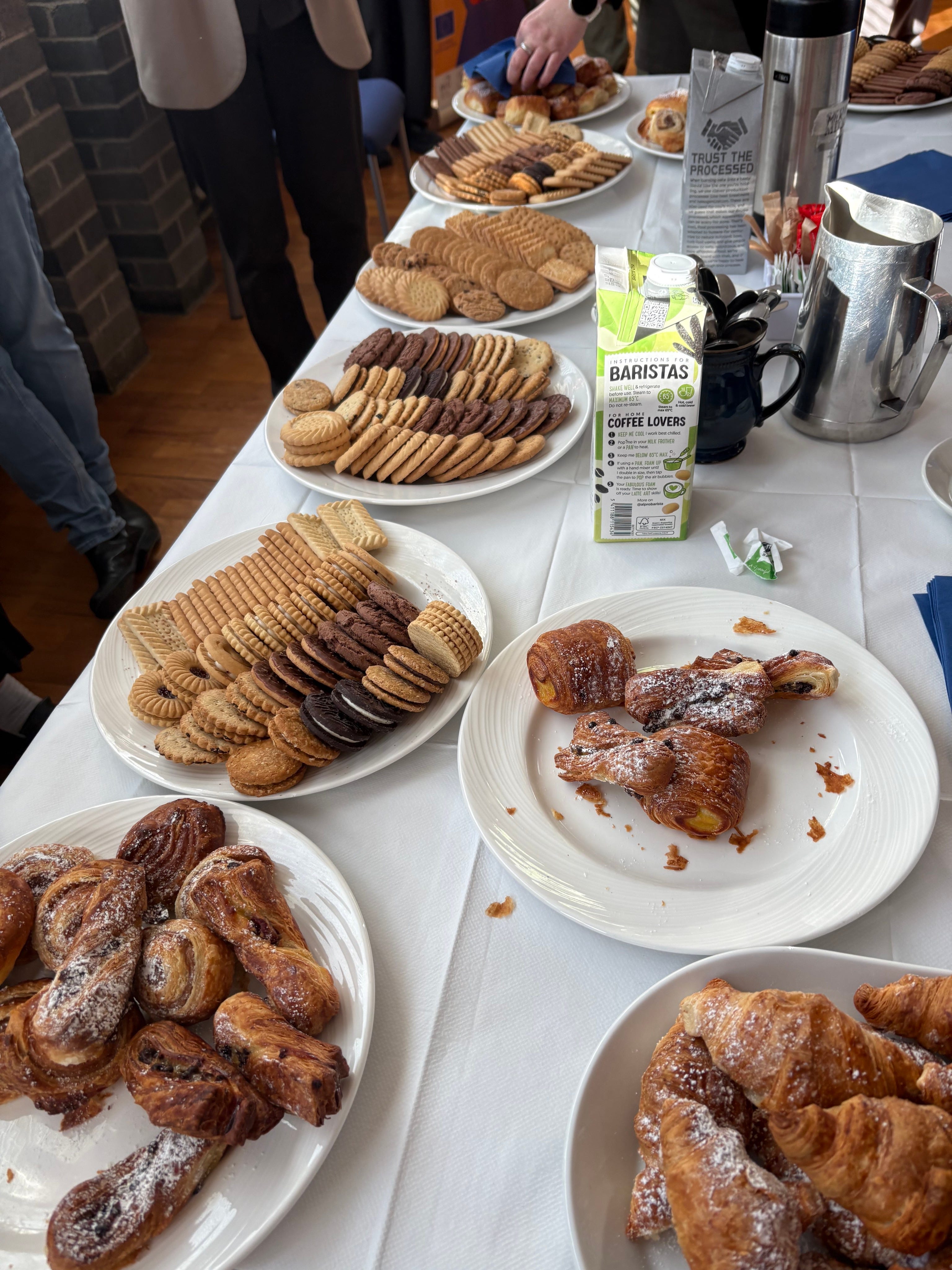
At the first break, I discovered that Ireland had provided its own contribution to the longevity debate in the form of an extraordinary spread of biscuits. The programme called this part of the day “Break and Networking.” I called it biscuit nirvana. Irish biscuits are not simply food to me. They are part of my cultural DNA and apparently capable of producing an emotional response normally reserved for returning emigrants and people reunited with a childhood pet.
I had arrived alone and was feeling socially unmoored, conspicuous and invisible in equal measure. It was that peculiar conference state in which everybody else appears to be greeting someone they have known since 1987 while you develop an intense interest in the tea bags.
“Hi, I’m Mags.”
It was almost embarrassingly easy. Within minutes, I was having real conversations with people from different countries, professions, generations and points of view. Nobody asked me to schedule a call. Nobody sent me a link. Nobody disappeared behind a mute button. We simply stood there, with coffee and culturally significant biscuits, and talked. I had not realised how much I had missed that.
I seem to have stepped into a very digital world over the past few years. It allows me to work across countries, build a business and speak regularly to people I might never otherwise meet. But it can also give you the peculiar experience of being in contact with people all day while feeling that you have not actually met anyone.
The presentations drew me into questions I had barely considered. Some were philosophical. Others were intensely practical. One example from Greece showed how something as unromantic as pension policy can change whether people continue contributing after retirement.
Under earlier Greek rules, pensioners who continued working could lose 60 per cent of their pension. That penalty was later reduced to 30 per cent and, from January 2024, the pension cut was abolished and replaced by an additional contribution linked to employment income. Before the new system, only about 36,000 working pensioners had declared their employment. Within months, the number registered had risen to more than 180,000.
That does not mean 144,000 Greek pensioners all leapt out of bed one morning and returned to work. Many were probably already working informally. But it demonstrates something important: systems do not merely respond to human behaviour. They shape it. If continuing to work means losing a large part of your pension, people will either stop working or stop telling you about it.
DCU itself made the conversation feel particularly tangible. It describes itself as an age-friendly university, and what I liked was that age appeared to travel in both directions.
That is what age-friendly should mean. Not a polite corner set aside for older people, but a place that recognises curiosity has no expiry date.
The lectures gave me knowledge, but the conversations did something else. Speaking to people of different ages, cultures and professional backgrounds reminded me why I am building Next Decade and also clarified what it needs to become.
Courses have value. Coaching has value. But information alone is not enough. Most of us are already carrying around more advice than we could implement in several lifetimes. What is often missing is a community in which people can test ideas, share experience, challenge one another and see possibilities they would not have found while sitting alone in front of a screen.
Next Decade is for people who want to think deliberately about the next ten years of their lives, whatever their age. You might be changing direction, approaching retirement, already retired or simply unwilling to drift into a future designed by somebody else.
This is not about insisting that everybody must launch a business, enrol at university or discover a magnificent new purpose before breakfast. Gardening, travelling, playing golf or doing absolutely nothing on a Tuesday morning may be precisely what you want. The point is to make it a choice.
Perhaps there is another project in you. Perhaps you want to study again, start something, mentor someone, contribute to a cause or finally explore the idea that has been following you around for years. Perhaps you simply want better conversations with people who are asking similar questions.
That is the community I want Next Decade to become.
I am inviting the first 100 members to join free while we shape it together. If you would rather explore your next decade with other thoughtful people than alone with an algorithm and a rapidly cooling cup of coffee, you would be very welcome:
And in the absence of a photograph proving that I actually presented at the conference, I can offer photographic evidence of the biscuits.
Priorities matter!
This article was originally published in my newsletter, The Next Decade. Read it on Substack or subscribe to get the next edition in your inbox.
Enjoyed this? Get the next edition.
Subscribe and I’ll email you a link each time a new edition is published.